PAYMENTS
From Direct Entry to Real-Time Payments: How Australia Is Modernising Its Domestic Payment Infrastructure
What Is BECS?
The Bulk Electronic Clearing System, or BECS, is the framework that Australians commonly know as Direct Entry. It has been the backbone of electronic account-to-account payments for decades. BECS supports two main payment types:
- Direct credits: Salaries, wages, government payments, pensions, supplier payments and refunds — where money is pushed from one account to many others.
- Direct debits: Recurring bill payments, subscription charges and instalment arrangements — where a business pulls funds from customer accounts with prior authorisation.
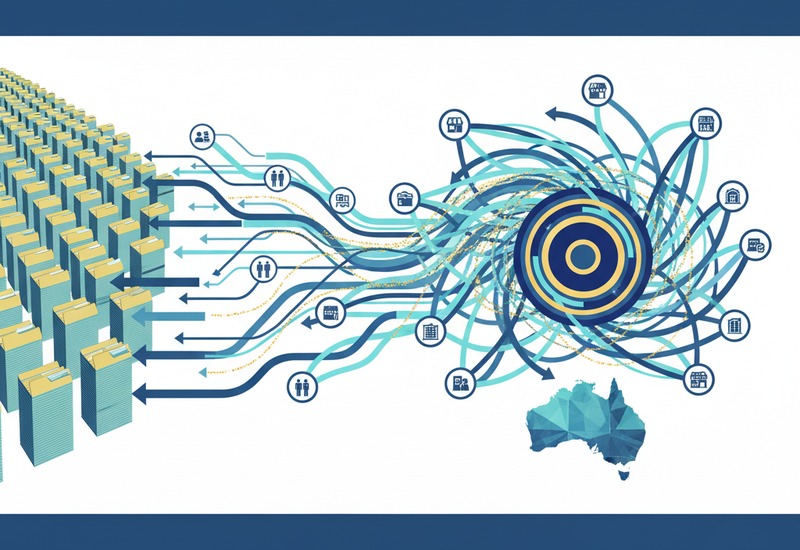
BECS processes large volumes of transactions in scheduled batches. A payroll file might contain thousands of individual salary payments. A direct debit run might collect from hundreds of thousands of customers. These batches are processed at set times throughout the day and overnight, with settlement occurring on a deferred basis. The system has been reliable and has served Australia well, but it was designed in an era before continuous real-time processing was technically or economically feasible.
Why Australia Is Moving Towards the NPP
The NPP offers several fundamental improvements over BECS:
- 24/7 operation: Payments can be made and received at any time, including weekends and public holidays — a significant change from BECS processing windows.
- Faster access to funds: Instead of waiting overnight or through a weekend for a payment to clear, NPP transactions are typically settled within seconds.
- Richer data: While BECS payments carry minimal description text (typically 18 characters), NPP payments support extended descriptions and structured remittance data suitable for automated reconciliation.
- Individual payment status: Each payment succeeds or fails individually, with immediate notification — unlike batch processing where an entire file may be rejected for a single error.
- Improved fraud and audit controls: Real-time processing combined with richer data enables more sophisticated fraud detection and easier audit trails.
- Automated reconciliation: Structured payment data reduces manual matching of payments to invoices, accounts and customers.
- Support for modern digital services: The NPP's architecture supports the kinds of instant, data-rich payment experiences that consumers and businesses increasingly expect.
Payments Affected by the Transition
The transition from BECS to the NPP affects a wide range of everyday payment types:
- Salaries and payroll: Employers may eventually be able to pay staff in real time, rather than processing payroll files that clear overnight. Emergency or out-of-cycle payments become simpler.
- Government payments: Pensions, welfare payments, tax refunds and grants could arrive in recipients' accounts within seconds of being approved.
- Superannuation: Employer super contributions could carry richer data, making it easier for funds to match contributions to member accounts.
- Supplier payments: Businesses paying suppliers could receive immediate confirmation and automatically reconcile payments against purchase orders.
- Refunds and disbursements: Customer refunds could be processed instantly rather than taking days.
- Recurring bills: Direct debits for utilities, telecommunications, insurance and subscriptions will progressively migrate to PayTo agreements.
- Corporate bulk payments: Large organisations making thousands of payments will need NPP-compatible bulk payment capabilities.
Why the Transition Cannot Be Rushed
Despite the clear benefits, the transition from BECS to the NPP is complex and cannot happen overnight:
- Account reach: Not every eligible bank account has identical NPP functionality. The Reserve Bank has identified unresolved account-reach issues as a key risk to BECS decommissioning.
- Business readiness: Companies need to update their software, payment-provider integrations and internal processes to support NPP-based payments, PayTo agreements and richer data formats.
- Bank capacity: Financial institutions must ensure their systems have sufficient capacity and resilience to handle large-scale real-time payment volumes, including peak periods.
- Bulk processing: Large institutions — government departments, major employers and superannuation funds — need bulk payment functionality that can handle thousands of payments efficiently through the NPP.
- Direct debit migration: Existing direct debit authorities must be carefully migrated to PayTo agreements, requiring customer communication and consent in many cases.
- Dispute resolution: Consumers and businesses need clear, tested processes for handling disputes, errors and exceptions in the new environment.
- Critical payment continuity: Essential payments — salaries, pensions, healthcare — must continue uninterrupted during any transition problems or outages.
What Domestic Payment Capability Means
This transition is about more than faster payments. It is about Australia maintaining and strengthening its domestic payment capability:
- Australian governance: Key domestic payment schemes are governed in Australia by Australian Payments Plus, with oversight from the Reserve Bank, Treasury and the ACCC.
- Australian standards: Payment message formats, security requirements and operating rules are designed for the Australian market, not imported from overseas.
- Settlement through the Reserve Bank: NPP transactions settle in central bank funds through the RBA's Fast Settlement Service — the strongest form of settlement available.
- Local investment: Australian financial institutions have invested in building and operating the NPP infrastructure domestically.
- Reduced dependence on non-domestic payment routes: For ordinary Australian account-to-account payments, the NPP provides a domestic path that does not rely on international card networks or foreign payment rails.
- Design for Australian needs: Systems can be designed around Australian consumers, businesses, regulation and public policy — rather than adapting to standards set for other markets.
What It Does Not Mean
It is important to be clear about what this domestic capability does not mean:
- AP+ is member-owned, not directly owned by the Australian Government.
- International technology suppliers may still provide components and services within the Australian payment system.
- Foreign financial institutions can and do participate in the Australian market.
- Australia has not eliminated all international payment networks — international card schemes continue to operate alongside domestic infrastructure.
- Not every domestic payment already runs through the NPP — BECS remains operational and widely used.
- PayTo has not yet replaced every direct debit — the transition is underway but incomplete.
The Role of Australian Payment Service Providers
Australian payment service providers, or PSPs, play an important role in helping businesses connect to domestic payment infrastructure. A capable Australian PSP can help businesses:
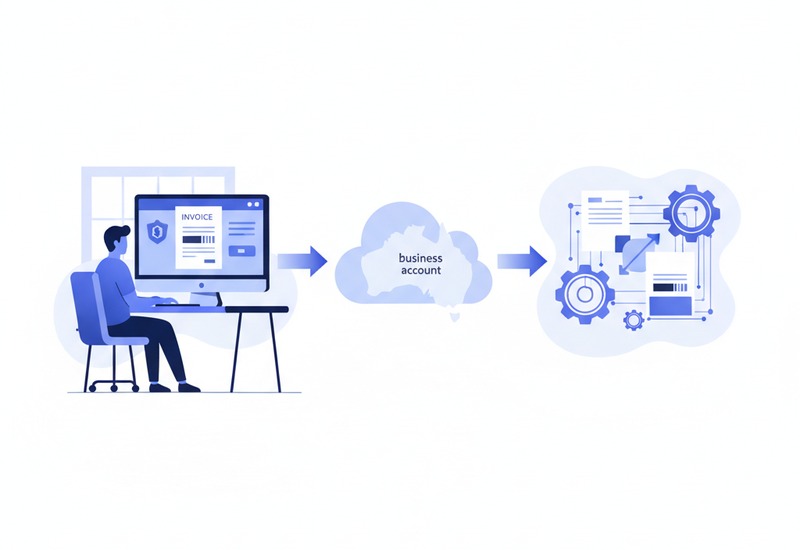
- Connect billing and invoicing platforms to domestic payment services including BPAY, PayID and PayTo.
- Automate payment reconciliation by mapping structured payment data to accounting and ERP systems.
- Create and manage payment references, CRNs and agreement templates.
- Integrate PayID and PayTo into checkout, invoicing and recurring payment workflows.
- Reduce manual bank-file handling through direct API integration with payment infrastructure.
- Improve transaction reporting with real-time status information and richer data.
- Build locally appropriate payment experiences that reflect Australian regulatory requirements and customer expectations.
Continue Learning About Australia's Domestic Payments System