17 Aug 2026
17 August, 2026
Monday
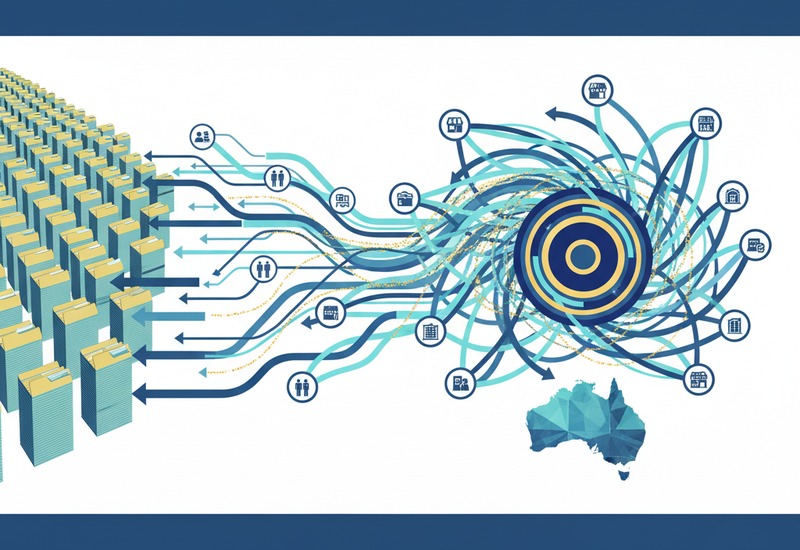
Every time an Australian taps their card at a checkout, the money does not simply move from one Australian bank account to another. It travels through a payment network — and more often than not, that network is owned and operated by a company headquartered overseas.
This is not a fringe detail. It sits at the centre of a growing conversation about payment sovereignty: a nation's ability to control how its own money moves.
Australia is in an unusual position. We have built one of the most advanced domestic payment systems in the world — the New Payments Platform, or NPP, which moves money in real time, 24 hours a day, every day of the year. Yet the bulk of everyday card payments still rely on infrastructure owned outside the country. That gap between what we have built and what we actually use is what this article is about.
Payment sovereignty is not a political slogan. It is a practical idea with a clear definition: a country should be able to process its own payments on infrastructure it controls, under its own laws, without depending on foreign-owned networks for day-to-day economic activity.
It matters on three distinct levels:
A country that outsources all three has, in effect, outsourced a piece of its own financial plumbing. A country that retains them keeps both the resilience and the economic benefit of its payments system at home.
Walk into any Australian shop, cafe or service station and the dominant payment methods are card schemes — Visa and Mastercard being the two largest. Both are global companies with Australian operations, but their core networks, their switching infrastructure, and their ultimate owners sit offshore.
This is not a criticism of those companies. They have built reliable, secure and widely accepted networks, and they play a legitimate role in cross-border and card-based commerce. The issue is one of balance: Australia has allowed a foreign-owned card rail to become the default path for everyday domestic payments, when a world-class domestic alternative already exists.
Consider the mechanics. When a customer pays by card, a series of fees is carved out of the transaction — interchange fees, scheme fees, acquiring fees — and a meaningful portion of that value flows out of the Australian economy to the international networks. For a single transaction the amount is small. Multiplied across millions of transactions a day, it becomes a substantial, ongoing transfer of value offshore.
There is also a data dimension. Card transactions generate a stream of information about who buys what, where, and when. The more of that activity runs through foreign-owned infrastructure, the less control Australian consumers and regulators have over how that data is stored, accessed and protected.
The Reserve Bank of Australia has recognised this dependency for years. Its push for least-cost routing — letting merchants choose the cheapest network to process a debit transaction rather than defaulting to an international scheme — is a direct effort to strengthen domestic competition in the payments market.
Australia already owns the answer to this problem. The New Payments Platform (NPP) is a domestic, real-time payment system built and operated for the Australian market by Australian Payments Plus (AP+), and it is overseen by the Reserve Bank.
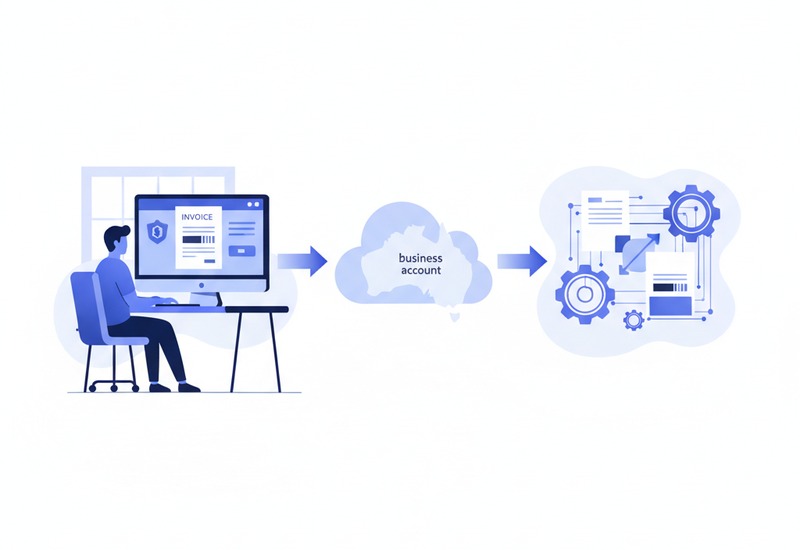
The NPP is not a card network. It moves money directly between bank accounts, in real time, around the clock. It is the infrastructure behind the services most Australians already recognise:
Collectively these are the pieces of a genuine domestic alternative to the international card networks. They run on Australian rails, settle in Australian currency through the Reserve Bank, and keep transaction data within the reach of Australian law.
Payment sovereignty is not an abstract national-interest concern. It translates into concrete outcomes for the people and businesses who use the system every day.
Domestic account-to-account payments are typically far cheaper to process than international card transactions. When businesses move more of their payment volume onto domestic rails, the savings are real — and unlike card-scheme fees, the value generated by a domestic system is more likely to be reinvested in Australian infrastructure, jobs and innovation.
Real-time domestic rails settle instantly, giving businesses immediate confirmation that a payment has cleared. They also reduce dependence on a small number of global networks. In a world where outages, cyber incidents and geopolitical shocks are a recurring reality, having a robust domestic alternative is a form of national insurance.
Account-to-account payments through the NPP generate less of the rich, monetisable data that card networks collect — and what is generated remains within Australian-regulated infrastructure, subject to the Privacy Act and Australian oversight.
Services like PayTo give customers a level of visibility and control over recurring payments that traditional card-on-file and direct-debit arrangements have never offered. You can see every agreement in your banking app, and pause or cancel it without phoning a call centre. That is the kind of consumer protection that a modern, sovereign payment system makes possible.
The global trend is unmistakable. Countries around the world are building their own sovereign payment rails rather than ceding the space entirely to international card networks:
Australia is well ahead of many of these countries on the technology. The NPP launched in 2018 and has been processing real-time payments at scale ever since. The gap is not capability — it is adoption. Too much everyday spending still defaults to foreign rails when a better domestic option is already built.
Building the rails was the hard part, and Australia has done it. The remaining work is about shifting behaviour and completing the ecosystem:
None of this means abandoning the international card networks. They remain useful for cross-border commerce and for customers who choose them. The goal of payment sovereignty is not to remove choice — it is to ensure that the default for Australian-to-Australian payments is Australian infrastructure.
Australia built a world-class, real-time, domestic payment system years ago. The challenge now is to use it to its full potential.
Payment sovereignty is about resilience, data protection and keeping the economic value of our payments within our own economy. For consumers, it means more control and lower costs. For businesses, it means faster settlement and cheaper rails. For the country, it means a payments system that can keep working — and keep delivering value — no matter what happens elsewhere in the world.
The rails are already there. The next step is making them the first choice, not the alternative.
Nothing in this article constitutes financial advice. Consult a qualified professional before making financial or business decisions.